There are times I worry the things I say aren’t all that deep.
This almost always stems from comparison of some kind, which is, of course, unhealthy. Comparison is the thief of joy, as the old saying goes. But in a late-stage capitalist hellscape like this one, comparing ourselves to others is a reflex.
Prime example of such a comparison: I just finished reading Hanif Abdurraquib’s A Little Devil in America, an absolutely staggering examination of Black performance in music, media, and American life. The book culminates in a final essay, entitled “On Times I Have Forced Myself Not to Dance,” which opens with the following line:
I have wanted to die enough times in my life to understand the idea that wanting to die is not a foolish thing.

“fuck, I didn’t know you could do that with words…”
Such a staggering and elegant articulation of the desire to exit one’s existence made me stop to ponder my own scattered brushes with suicidal ideation. I’ve written about such moments at length (often in private spheres not destined for the internet), but so often these musing feels stilted. Forced. False.
In revisiting my attempts to recall such experiences in the written word, I find myself asking difficult questions: How do you capture your most raw and real brushes with the edges of your existence? Is such a thing even possible?
The closest thing I have to an answer for such an artistic quandary comes from another staggering work that recently entered my life, the documentary, Kurt Vonnegut: Unstuck in Time.
One of the most inspiring sequences of the film describes the writing of Vonnegut’s seminal work, Slaughterhouse-Five, which famously recounts the author’s experience during the firebombing of Dresden.
“He’s trying everything to get it right,” says filmmaker Robert Weide of Vonnegut’s various drafts, each an attempt to capture his trauma in prose. “Sometimes he’s halfway through the novel before starts all over again. Sometimes he changes course after an opening paragraph. But he just wont give up. You just see him persevering and rewriting again and again and he just can’t crack the code. It’s like he’s not just trying to get a beat on the book. It’s almost like he’s trying to purge the whole Dresden experience from his soul once and for all. And just when think Dresden is about to claim one more victim, he nails it.”
I suppose that Vonnegut managed to transmute a traumatic experience far greater than anything I’ve ever encountered (or hopefully ever will encounter) into a classic work of literature should be a testament to art’s ability to remove the stains of trauma that linger on the soul. However, I can’t help but feel my own attempts at such exorcism are mere performance.
As I dive back into my memory, my mythology, the stories I tell myself about who I am, that falseness I feel seems to stem from the performed nature of my pain. I’m not expressing the hurt so much as I’m doing a song and dance for the sake of some imagined audience.
Perhaps this is the result of living in a media saturated world, where every blog post and photo and tweet is carefully measured to determine its validity in relation to our “brand.” But in the intersection between genuine expression for the sake of understanding one’s existence and performing such an exploration for the benefit of an audience, where does one act end and the other begin?
Have we all gotten so good at performing who we perceive ourselves to be, we’ve forgotten who we are? Is the performance, in fact, all we are?
Such a question brings me to a show like Fleabag.
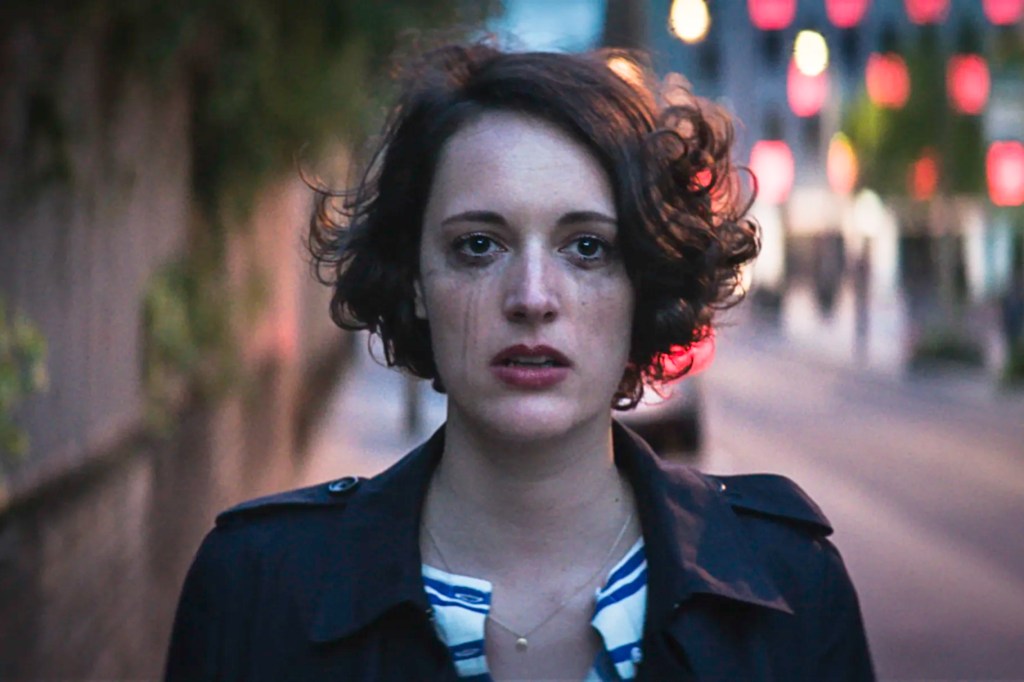
who’s to say what’s real and what isn’t?
There’s a sense of unbridled honesty that seeps from the sarcasm and humor of Phoebe Waller-Bridge’s unnamed protagonist. However, the further you dive into the show, the more apparent it becomes the unvarnished recounting of every sexual escapade and each string of off-color jokes are mere distraction from deep seeded pain and grief.
There’s a fair amount of oversharing in Waller-Bridge’s comic heroine, but make no mistake. There isn’t an ounce of truth telling. This is a prime example of a character performing vulnerability.
There are moments when I worry all I am is such a character — a chronic-over-sharer whose unsavory anecdotes and twisted attempts at art-making mask a trove of memories and ideas unknowable to anyone but the person living inside my skull. And it’s in moments like these when I want so desperately to shake myself from all the things I pretend to be.
Every so often, I hear this sentiment reflected back to me in the world, most recently in The Menzinger’s “Hope is a Dangerous Little Thing.” That part of me, buried deep beneath all the conflicting stories of who I tell myself I am, sits up a little straighter and hums along as the bridge of the song swells into the line, “Sometimes I wanna blow up my life and become someone else…”
Sing those words enough times and it isn’t the least bit mysterious why we long for our own absence.
Being a human is exhausting, isn’t it?
And of course, the fact that I’m writing these things in a public place only further compounds the problem…
And now for something completely different: I once wrote a letter to my future self, in which I claimed “being alive is the bravest thing to be.” This sentiment has become a kind of spoken talisman for me on those darkest of days when swimming my way out of my own shape sounds all too appealing.
 joshua chamberlain